
Multiprog 2001 Xl Software Download --39-link--39- Best Link
State of the art timing analysis
with industry-hardened methods and tools.
State of the art timing analysis
with industry-hardened methods and tools.
...with industry-hardened methods and tools. T1 empowers and enables. T1 is the most frequently deployed timing tool in the automotive industry , being used for many years in hundreds of mass-production projects.
As a worldwide premiere, the ISO 26262 ASIL‑D certified T1-TARGET-SW allows safe instrumentation based timing analysis and timing supervision. In the car. In mass-production.
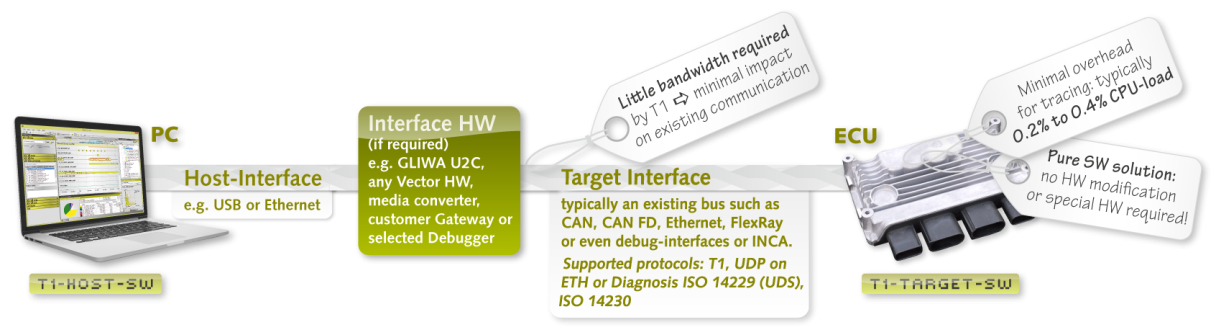
T1.timing comes with two extension options. Add-on product T1.streaming provides the possibility to stream trace data continuously — over seconds, minutes, hours or even days. Add-on product T1.posix supports POSIX operating systems such as Linux or QNX.
T1.timing comes with a modular concept and several plug-ins which are described in the following. Plug-ins can be easily enabled or disabled at compile-time using dedicated compiler switches such as T1_DISABLE_T1_CONT. To disable T1 altogether, it is sufficient to disable compiler switch T1_ENABLE which leaves the system in a state as of before the T1 integration.
Multiprog 2001 XL is a programming software developed by Klockner-Moeller (now part of Eaton) for their PLCs (Programmable Logic Controllers). The software is designed to facilitate programming, testing, and debugging of PLC applications.
was another programming suite that was compatible with the Multiprog hardware. Like TwoProg, it was often mentioned in the context of programming smart cards and offered a user-friendly interface. ChipCat was perhaps best known for its ability to handle "loaders," a type of firmware that prepared a card for programming. As smart card programming evolved, the functions of a loader were often built directly into the software itself, making the process much simpler. ChipCat was at the forefront of this integration.
The phrase "interesting paper for Multiprog 2001 Xl Software Download --39-LINK--39-" is often associated with spam or "SEO-bombed" websites rather than a legitimate academic paper. However, there are two distinct ways to interpret this request depending on your goal: 1. The Hardware Programmer (Multiprog 2001 XL)
The Multiprog 2001 XL remains a nostalgic milestone in the history of embedded engineering—a reminder of a time when the boundaries of digital security were actively explored on hobbyist workbenches.
The phrase you provided, "Multiprog 2001 Xl Software Download --39-LINK--39-" , isn't actually a review, but rather a common format for spam or "warez" titles found on file-sharing forums and low-quality SEO websites
Set up a virtual machine (using VirtualBox or VMware) running Windows XP, and configure direct serial port passthrough if your motherboard supports it. Step 2: Sourcing the Software Safely
The Multi-Prog software provides a user-friendly interface for professional locksmiths and automotive technicians.
The software interfaces of that era were built for early versions of Microsoft Windows (such as Windows 98, ME, 2000, or XP). These software suites allowed users to:
Download and install a virtualization platform like or VMware Workstation Player .
Popular terms for specific hobbyist smart cards that utilized combinations of PIC microcontrollers (like the PIC16F84) and EEPROMs (like the 24C16). The Role of Multiprog Software
Open the Multiprog executable file (run as Administrator).
No official Softing documentation mentions “39-LINK”. If you find a download with that tag, it is .
The software streamlined a process that would otherwise be complicated. For example, it allowed users to program both the main microcontroller (flash) and the external EEPROM memory on a card in one seamless operation. This made TwoProg the go-to software for the satellite TV and card-sharing hobbyist communities of the era.
This public link is valid for 7 days and shares a thread, including any personal information you added. This link or copies made by others cannot be deleted. If you share with third parties, their policies apply. Can’t copy the link right now. Try again later.
Downloading the software is only half the battle. Because this hardware was built for an older era of computing, you will likely encounter these issues:
Understanding the Multiprog 2001 XL: Software, Legacy, and Risks
For POSIX-based projects, see T1.posix.
Multiprog 2001 XL is a programming software developed by Klockner-Moeller (now part of Eaton) for their PLCs (Programmable Logic Controllers). The software is designed to facilitate programming, testing, and debugging of PLC applications.
was another programming suite that was compatible with the Multiprog hardware. Like TwoProg, it was often mentioned in the context of programming smart cards and offered a user-friendly interface. ChipCat was perhaps best known for its ability to handle "loaders," a type of firmware that prepared a card for programming. As smart card programming evolved, the functions of a loader were often built directly into the software itself, making the process much simpler. ChipCat was at the forefront of this integration.
The phrase "interesting paper for Multiprog 2001 Xl Software Download --39-LINK--39-" is often associated with spam or "SEO-bombed" websites rather than a legitimate academic paper. However, there are two distinct ways to interpret this request depending on your goal: 1. The Hardware Programmer (Multiprog 2001 XL)
The Multiprog 2001 XL remains a nostalgic milestone in the history of embedded engineering—a reminder of a time when the boundaries of digital security were actively explored on hobbyist workbenches.
The phrase you provided, "Multiprog 2001 Xl Software Download --39-LINK--39-" , isn't actually a review, but rather a common format for spam or "warez" titles found on file-sharing forums and low-quality SEO websites Multiprog 2001 Xl Software Download --39-LINK--39-
Set up a virtual machine (using VirtualBox or VMware) running Windows XP, and configure direct serial port passthrough if your motherboard supports it. Step 2: Sourcing the Software Safely
The Multi-Prog software provides a user-friendly interface for professional locksmiths and automotive technicians.
The software interfaces of that era were built for early versions of Microsoft Windows (such as Windows 98, ME, 2000, or XP). These software suites allowed users to:
Download and install a virtualization platform like or VMware Workstation Player . Multiprog 2001 XL is a programming software developed
Popular terms for specific hobbyist smart cards that utilized combinations of PIC microcontrollers (like the PIC16F84) and EEPROMs (like the 24C16). The Role of Multiprog Software
Open the Multiprog executable file (run as Administrator).
No official Softing documentation mentions “39-LINK”. If you find a download with that tag, it is .
The software streamlined a process that would otherwise be complicated. For example, it allowed users to program both the main microcontroller (flash) and the external EEPROM memory on a card in one seamless operation. This made TwoProg the go-to software for the satellite TV and card-sharing hobbyist communities of the era. Like TwoProg, it was often mentioned in the
This public link is valid for 7 days and shares a thread, including any personal information you added. This link or copies made by others cannot be deleted. If you share with third parties, their policies apply. Can’t copy the link right now. Try again later.
Downloading the software is only half the battle. Because this hardware was built for an older era of computing, you will likely encounter these issues:
Understanding the Multiprog 2001 XL: Software, Legacy, and Risks
| Vendor | Operating System |
|---|---|
| Customer | Any in-house OS** |
| Customer | No OS - scheduling loop plus interrupts** |
| Elektrobit | EB tresos AutoCore OS |
| Elektrobit | EB tresos Safety OS |
| ETAS | RTA-OS |
| GLIWA | gliwOS |
| HighTec | PXROS-HR |
| Hyundai AutoEver | Mobilgene |
| KPIT Cummins | KPIT** |
| Siemens | Capital VSTAR OS |
| Micriμm | μC/OS-II** |
| Vector | MICROSAR-OS |
| Amazon Web Services | FreeRTOS** |
| WITTENSTEIN high integrity systems | SafeRTOS** |
| Qorix | Qorix Classic |
| Embedded Office | Flexible Safety RTOS |
(**) T1 OS adaptation package T1-ADAPT-OS required.
| Target Interface | Comment |
|---|---|
| CAN | Low bandwidth requirement: typically one CAN message every 1 to 10ms. The bandwidth consumed by T1 is scalable and strictly deterministic. |
| CAN FD | Low bandwidth requirement: typically one CAN message every 1 to 10ms. The bandwidth consumed by T1 is scalable and strictly deterministic. |
| Diagnostic Interface | The diagnostic interface supports ISO14229 (UDS) as well as ISO14230, both via CAN with transportation protocol ISO15765-2 (addressing modes 'normal' and 'extended'). The T1-HOST-SW connects to the Diagnostic Interface using CAN. |
| Ethernet (IP:TCP, UDP) | TCP and UDP can be used, IP-address and port can be configured. |
| FlexRay | FlexRay is supported via the diagnostic interface and a CAN bridge. |
| Serial Line | Serial communication (e.g. RS232) is often used if no other communication interfaces are present. On the PC side, an USB-to-serial adapter is necessary. |
| JTAG/DAP | Interfaces exist to well-known debug environments such as Lauterbach TRACE32, iSYSTEM winIDEA and PLS UDE. The T1 JTAG interface requires an external debugger to be connected and, for data transfer, the target is halted. TriCore processors use DAP instead of JTAG. |
