


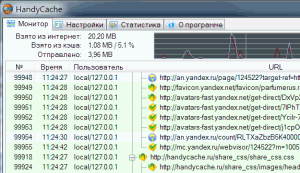
 Это далеко не все, в чем может помочь наш прокси-сервер. С его помощью можно будет просматривать ранее загруженные страницы без подключения к сети интернет, переносить кэш с одного компьютера на другой, подключаться к разным серверам через разные внешние прокси и многое другое.
Image2lcd Register Code Jun 2026
Many websites claim to offer an "Image2Lcd keygen," "crack," or "patched executable." Downloading these files poses severe risks to your development environment.
// Define the display's I/O pins #define DISPLAY_RS_PIN GPIO_PIN_0 #define DISPLAY_RW_PIN GPIO_PIN_1 #define DISPLAY_E_PIN GPIO_PIN_2
Adjust scanning directions (horizontal or vertical) to match the control IC of your specific LCD or ePaper module.
Image2LCD is a popular, lightweight software tool designed specifically for embedded system developers, hobbyists, and engineers. It converts images (BMP, JPG, GIF) into data arrays (C/C++ hex code) that can be easily embedded into microcontroller code to display graphics on LCD screens (like OLEDs, TFTs, or LCDs running on Arduino, STM32, or PIC). image2lcd register code
: After configuring scanning modes and parameters, you can save the file and copy the resulting array into your project code (e.g., in the Arduino IDE) [4, 5].
What is the of your display controller? (e.g., ST7735, ILI9341, SSD1306)
Output C array formats ( unsigned char[] or unsigned short[] ) ready to be pasted into your code. Why You Need an Image2LCD Register Code Many websites claim to offer an "Image2Lcd keygen,"
Even with correct parameters, display problems can arise. Here are the most common issues and their solutions.
Click the Register button, typically found in the main interface or under a "Help" menu.
Image is upside down or horizontally mirrored Probable Cause: The driver's MADCTL register setting does not match the scanning mode selected in Image2LCD. Adjust the MADCTL bits (MX, MY, MV) to align the GRAM increment direction with the scanning mode. It converts images (BMP, JPG, GIF) into data
#include "display_driver.h" // Hardware specific write commands void LCD_WriteCommand(uint8_t cmd) LCD_DC_LOW(); // Set Data/Command pin to Command LCD_CS_LOW(); // Select LCD chip SPI_Transmit(cmd); // Send command byte LCD_CS_HIGH(); // Deselect LCD chip void LCD_WriteData(uint8_t data) LCD_DC_HIGH(); // Set Data/Command pin to Data LCD_CS_LOW(); // Select LCD chip SPI_Transmit(data); // Send data byte LCD_CS_HIGH(); // Deselect LCD chip // Function to set the drawing window registers void LCD_SetAddressWindow(uint16_t x0, uint16_t y0, uint16_t x1, uint16_t y1) // Column Address Set Register LCD_WriteCommand(0x2A); LCD_WriteData(x0 >> 8); LCD_WriteData(x0 & 0xFF); LCD_WriteData(x1 >> 8); LCD_WriteData(x1 & 0xFF); // Page/Row Address Set Register LCD_WriteCommand(0x2B); LCD_WriteData(y0 >> 8); LCD_WriteData(y0 & 0xFF); LCD_WriteData(y1 >> 8); LCD_WriteData(y1 & 0xFF); // Memory Write Register (Prepares GRAM to receive pixel stream) LCD_WriteCommand(0x2C); // Function to stream the Image2Lcd array to the display registers void LCD_DrawImage(uint16_t x, uint16_t y, uint16_t width, uint16_t height, const unsigned char* image_array) uint32_t total_bytes = width * height * 2; // 2 bytes per pixel for RGB565 // Set boundaries on the LCD display LCD_SetAddressWindow(x, y, x + width - 1, y + height - 1); // Select display for continuous data streaming LCD_DC_HIGH(); LCD_CS_LOW(); // Loop through the Image2Lcd array and push to registers for(uint32_t i = 0; i < total_bytes; i++) SPI_Transmit(image_array[i]); LCD_CS_HIGH(); Use code with caution. Troubleshooting Common Code Issues
void lcd_init(void) uint8_t *ptr = ili9341_init_cmds; while (*ptr != 0xFF) // assume terminator uint8_t cmd = *ptr++; uint8_t len = *ptr++; lcd_send_cmd(cmd); for (uint8_t i = 0; i < len; i++) lcd_send_data(*ptr++);
The official and safest way to acquire a register code is to purchase the license through the developer.
The free trial version of Image2LCD usually includes a, "Unregistered" or "Image2LCD" watermark, which is often added directly into the generated C array code.

